Lix for AI Agents

AI agent changes need to be visible and controllable

AI agents generate a tremendous volume of changes. These changes need to be reviewed, attributed, and approved; Lix change control provides the safety layer so every edit is traceable, humans decide what ships, and any change can be rolled back.

Every change is reviewable

  • Use attribution to see exactly which agent (or human) changed a field, paragraph, or table cell.
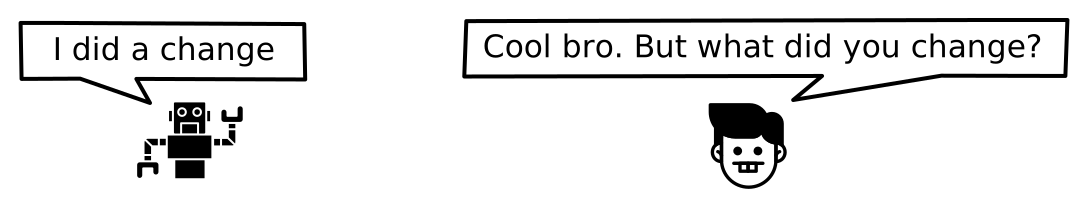
  • Compare versions with entity-aware diffs so reviewers understand the intent of a change instead of guessing from raw text.
  • Keep a durable audit trail; you can query history for “Which agent touched this configuration last?” at any time.

Users stay in control

Agents can draft changes, but humans stay in the loop with lightweight review tools.

  • Change proposals bundle the diff, discussion, and approval state. Accept the good ideas, reject the hallucinations.
  • Start review conversations with stakeholders or other agents using comments and mentions from conversations.
  • Merge once the proposal is ready, or request another revision—the entire workflow maps to familiar pull-request style collaboration.

Safe sandboxes for agents

Versions let you spin up isolated environments so agents can explore ideas without touching production data.

  • Run multiple agents in parallel, each in their own version.
  • Compare their diffs, merge the best outcome, or discard a version entirely.
  • If something slips through, use restore to jump back to a known-good state in seconds.

Typical workflow

  1. Orchestration layer opens a fresh version for an agent task.
  2. Agent writes changes; Lix auto-commits and tracks attribution.
  3. Another agent or a human reviewer inspects the diff and opens a change proposal.
  4. Reviewers comment, request edits, and approve when ready.
  5. Merge the proposal or discard it; restore any previous snapshot if plans change.

Coming soon: automated guardrails

NOTE

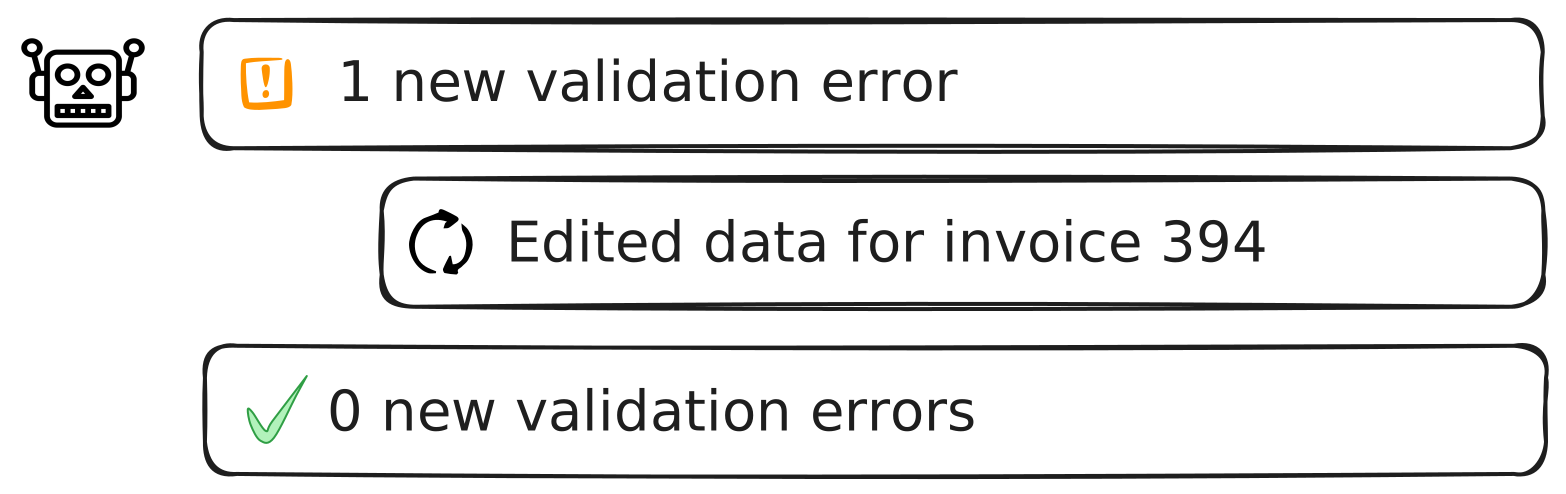
Validation rules are an upcoming feature. They will let you define automated checks that agents can use to self-correct before a human ever sees the proposal. Follow the issue for progress and demos.

Validation rules for AI agents

Next steps